
 Dawnmarie Souza's comments on her Facebook page didn't win her any points with the boss, but the rest of us owe her a debt of gratitude. In a rare test of old law on a new medium, she helped us understand just how little the online world differs from the land of bricks and mortar.
Souza's career as a paramedic at American Medical Response of Connecticut Inc. may not have been too bright even before she called her boss various genital parts in a November 2009 Facebook posting. She had been hauled on the carpet for several incidents of allegedly rude behavior and had further rankled the emergency-response company by asking to have a union representative present when she was to be questioned about one particular customer's complaint that she had been rude, according to a National Labor Relations Board (NLRB) investigation of the case. The company denied the request, and that, in turn, set off her colorful Facebook flurry. American Medical fired her 23 days later. ...
Dawnmarie Souza's comments on her Facebook page didn't win her any points with the boss, but the rest of us owe her a debt of gratitude. In a rare test of old law on a new medium, she helped us understand just how little the online world differs from the land of bricks and mortar.
Souza's career as a paramedic at American Medical Response of Connecticut Inc. may not have been too bright even before she called her boss various genital parts in a November 2009 Facebook posting. She had been hauled on the carpet for several incidents of allegedly rude behavior and had further rankled the emergency-response company by asking to have a union representative present when she was to be questioned about one particular customer's complaint that she had been rude, according to a National Labor Relations Board (NLRB) investigation of the case. The company denied the request, and that, in turn, set off her colorful Facebook flurry. American Medical fired her 23 days later. ...
 Shortly after christmas, New York Times columnist Nicholas Kristof opened an account on Sina Weibo, a Chinese microblog service that, like Twitter, allows users to share short messages of up to 140 characters. Kristof began testing what topics would be censored. He found out quickly. One of his first messages was "Can we talk about Falun Gong?" — a reference to the spiritual movement banned by Beijing. Within an hour of his first post, Kristof's account was canceled.
At first glance it would seem that China's new Internet is a lot like its old Internet. Overseas sites that are deemed sensitive — including YouTube, Facebook and Twitter, among thousands of others — are blocked, part of a network of control sometimes called the Great Firewall of China. Inside the wall, Chinese search engines won't, for example, link to content to do with the 1989 Tiananmen crackdown, Nobel Peace Prize winner Liu Xiaobo or Tibetan independence; also, domestic Internet companies are required to delete any material that the authorities find objectionable. Even as China's Netizens have rushed to embrace Web 2.0, an Internet in which users are more closely and quickly linked by social-networking services, microblogs and free video hosting, those rules have still applied. ...
Shortly after christmas, New York Times columnist Nicholas Kristof opened an account on Sina Weibo, a Chinese microblog service that, like Twitter, allows users to share short messages of up to 140 characters. Kristof began testing what topics would be censored. He found out quickly. One of his first messages was "Can we talk about Falun Gong?" — a reference to the spiritual movement banned by Beijing. Within an hour of his first post, Kristof's account was canceled.
At first glance it would seem that China's new Internet is a lot like its old Internet. Overseas sites that are deemed sensitive — including YouTube, Facebook and Twitter, among thousands of others — are blocked, part of a network of control sometimes called the Great Firewall of China. Inside the wall, Chinese search engines won't, for example, link to content to do with the 1989 Tiananmen crackdown, Nobel Peace Prize winner Liu Xiaobo or Tibetan independence; also, domestic Internet companies are required to delete any material that the authorities find objectionable. Even as China's Netizens have rushed to embrace Web 2.0, an Internet in which users are more closely and quickly linked by social-networking services, microblogs and free video hosting, those rules have still applied. ...
 Today Florence & The Machine released some tour dates in the US via Facebook. On June 26 and June 29, she'll join U2 in East Lansing, Michigan and Miami, Florida. The other dates are solo shows.
Berkeley - June 12
Where: Greek Theatre
When: Sunday, June 12 from 7:00 pm to 10:00 pm
LA - June 13
Where: Greek Theatre L.A.
When: Monday, June 13 from 8:00 pm to 11:00 pm...
Today Florence & The Machine released some tour dates in the US via Facebook. On June 26 and June 29, she'll join U2 in East Lansing, Michigan and Miami, Florida. The other dates are solo shows.
Berkeley - June 12
Where: Greek Theatre
When: Sunday, June 12 from 7:00 pm to 10:00 pm
LA - June 13
Where: Greek Theatre L.A.
When: Monday, June 13 from 8:00 pm to 11:00 pm...
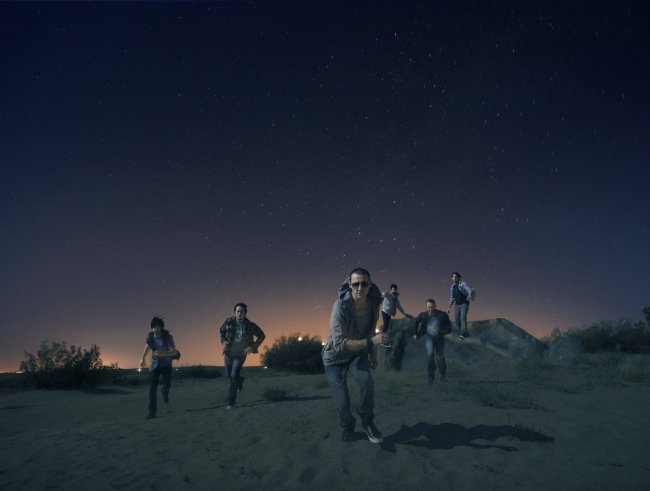 There have been so many Linkin Park news the last days, so I thought I could do a little summary for you guys!
1. The video for Linkin Park's upcoming single "Burning in the Skies" was shot. Here is what director Joe Hahn and LP mastermind Mike Shinoda tweeted about that:
http://twitter.com/#!/joehahnLP/status/26774154636173312
http://twitter.com/#!/joehahnLP/status/27569268971278337
http://twitter.com/#!/m_shinoda/status/27570152237178881
Sounds very interesting. Explosions would definitely fit to the songtitle!
2. Mike Shinoda will be ...
There have been so many Linkin Park news the last days, so I thought I could do a little summary for you guys!
1. The video for Linkin Park's upcoming single "Burning in the Skies" was shot. Here is what director Joe Hahn and LP mastermind Mike Shinoda tweeted about that:
http://twitter.com/#!/joehahnLP/status/26774154636173312
http://twitter.com/#!/joehahnLP/status/27569268971278337
http://twitter.com/#!/m_shinoda/status/27570152237178881
Sounds very interesting. Explosions would definitely fit to the songtitle!
2. Mike Shinoda will be ...
 Facebook normally catches flack for making private information available to advertisers. But last month, the social-networking site with half a billion users quietly added a feature that makes your private information available to the friends of your friends, which may be a much more nefarious group. A button called "See Friendship" aggregates onto a single page all of the information that two friends share: photos both people have been tagged in, events they have attended or are planning to attend, comments they have exchanged, etc.
To see this stuff, you need only ...
Facebook normally catches flack for making private information available to advertisers. But last month, the social-networking site with half a billion users quietly added a feature that makes your private information available to the friends of your friends, which may be a much more nefarious group. A button called "See Friendship" aggregates onto a single page all of the information that two friends share: photos both people have been tagged in, events they have attended or are planning to attend, comments they have exchanged, etc.
To see this stuff, you need only ...
 PALO ALTO, Calif. — For more than two decades, e-mail has been the killer application of the Internet. But Mark Zuckerberg, the chief executive of Facebook, believes that e-mail is antiquated.
On Monday, Mr. Zuckerberg unveiled a new unified messaging system on Facebook that allows people to communicate with each other regardless of whether they are using e-mail, text messages or online chat services.
“We don’t think a modern messaging system is going to be e-mail,” Mr. Zuckerberg said. He said that e-mail is too formal, too slow and too cumbersome, especially for young people who have grown up communicating using online chat and text messaging systems. The new Facebook service, which will allow users to have @facebook.com e-mail addresses, intends to integrate the three forms of communication into one inbox that is accessible from PCs or mobile phones.
...
PALO ALTO, Calif. — For more than two decades, e-mail has been the killer application of the Internet. But Mark Zuckerberg, the chief executive of Facebook, believes that e-mail is antiquated.
On Monday, Mr. Zuckerberg unveiled a new unified messaging system on Facebook that allows people to communicate with each other regardless of whether they are using e-mail, text messages or online chat services.
“We don’t think a modern messaging system is going to be e-mail,” Mr. Zuckerberg said. He said that e-mail is too formal, too slow and too cumbersome, especially for young people who have grown up communicating using online chat and text messaging systems. The new Facebook service, which will allow users to have @facebook.com e-mail addresses, intends to integrate the three forms of communication into one inbox that is accessible from PCs or mobile phones.
...